



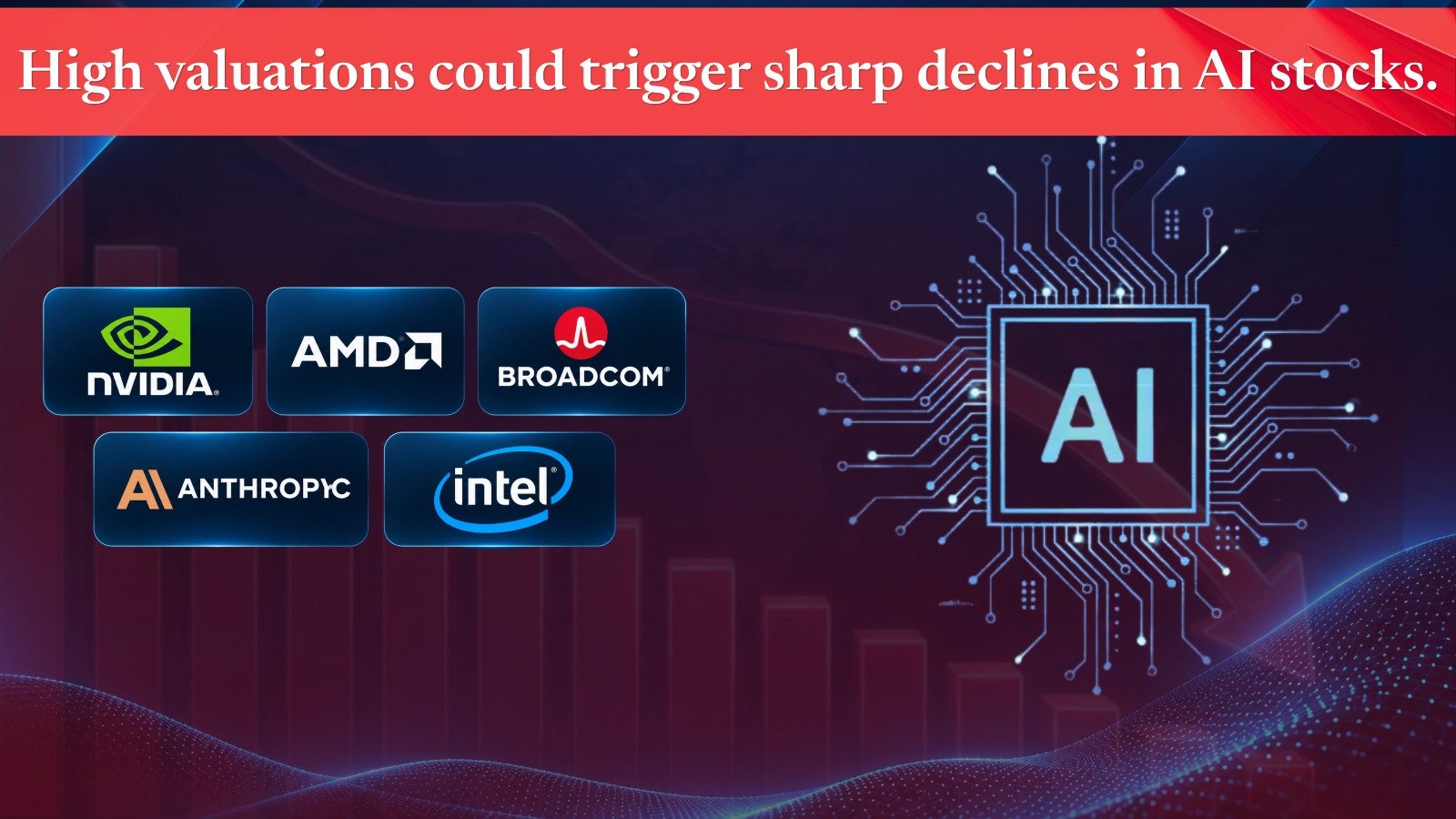
Artificial intelligence has been one of the strongest investment themes in recent years, driving major gains across the technology sector. However, investors are now beginning to question whether the excitement has pushed valuations too far. Concerns about high stock prices, rising infrastructure costs, and uncertain future profits are increasing the possibility of a significant correction in AI-related stocks.kjhg
Why Investors Are Becoming Cautious
The biggest concern is valuation. Many AI companies now trade at very high price-to-earnings ratios, which means investors are paying a large premium for future growth. When expectations are this high, even a small disappointment can trigger sharp selling. If earnings fail to match forecasts, the market may quickly reprice these stocks lower.Rising infrastructure costs are another pressure point. Building and operating AI systems requires enormous spending on data centers, advanced chips, electricity, and cloud capacity. These costs are growing faster than revenue for many companies, raising questions about how quickly AI investments will translate into real profits.Competition is also intensifying. More companies are entering the AI space, which could pressure pricing and reduce profit margins over time. At the same time, interest rate uncertainty remains a risk. If rates stay higher for longer, investors may favor safer assets over expensive growth stocks.
What a Correction Could Look Like
A correction does not necessarily mean the AI industry is failing. It may simply reflect a reset in expectations. Stocks that rallied sharply on optimism could fall as investors demand clearer evidence of earnings and sustainable growth. Smaller companies with weak balance sheets may face the toughest pressure, while established leaders with strong cash flows could prove more resilient.Selling pressure could spread across the broader technology sector, affecting semiconductor makers, cloud providers, software companies, and AI-focused start-ups. Market volatility may increase as investors rotate toward defensive sectors or companies with more predictable profits.
The Long-Term View
AI remains a powerful long-term trend with the potential to transform industries, improve productivity, and create new business models. The technology is still in its early stages, and demand for computing power, automation, and intelligent software is likely to grow.However, a promising industry does not guarantee strong short-term returns. Investors should focus on fundamentals such as revenue growth, profit margins, cash flow, competitive advantages, and reasonable valuations. Diversification and a long-term perspective can help reduce the impact of sharp market swings.
Final Thoughts
AI stocks may be entering a phase where enthusiasm meets reality. High valuations, rising costs, intense competition, and interest rate concerns could trigger a meaningful correction. While the long-term potential of artificial intelligence remains strong, investors should stay disciplined, avoid chasing hype, and ensure that current stock prices are supported by realistic expectations for future growth